
Kojic Acid Soap Side Effects
Published · By Amar Behura · ~17 min read
This AMVital guide covers every known side effect of kojic acid soap and kojic soap, who should avoid it, why it can burn, and how to use it safely for an even-looking tone.
Quick Answer
AMVital's Turmeric Kojic Acid Soap is generally safe, but kojic acid can cause mild dryness, temporary redness, tingling, and increased sun sensitivity. Most side effects are manageable with proper moisturizing and daily SPF 30+ sunscreen.
Many verified buyers report no side effects when starting slowly and moisturizing after each use. Serious reactions are rare with properly formulated products. See real results from verified buyers.
Key Facts
| Common Side Effects | Mild dryness, temporary redness, tingling, sun sensitivity |
| Safe Concentration | 1–4% kojic acid with moisturizing ingredients |
| Why It May Burn | Long contact time, broken skin, or combining with harsh actives too soon |
| Prevention | Patch test, start slowly, moisturize, SPF 30+ daily |
| Adjustment Period | Mild effects typically improve within 1–2 weeks |
| Stop If | Severe burning, blistering, hives, or worsening dark spots |
Key Takeaways
- Most people tolerate kojic acid soap well when used as directed
- Dryness and redness are the most common side effects — both manageable with moisturizer
- Burning usually means contact time is too long or skin barrier is already compromised
- Daily SPF 30+ sunscreen is essential — skipping it can worsen dark spots
- Patch test first and start 2–3× weekly to reduce risk
Safety Verdict
Kojic acid soap is generally safe for most skin types when used at 1–4% concentration with proper moisturizing.
Those with very sensitive skin, active eczema, or rosacea should patch test first or consider gentler turmeric alternatives.
Always use SPF 30+ sunscreen daily — kojic acid increases sun sensitivity.
Kojic Acid Soap Side Effects: Quick Reference
Common kojic soap side effects include mild dryness, temporary redness, slight tingling, and increased sensitivity to sunlight. These are the most frequently reported and usually resolve within 1–2 weeks with proper moisturizing.
Kojic acid side effects on the face can be more noticeable than on the body because facial skin is thinner. Keep lather contact to 60 seconds and apply moisturizer immediately after rinsing.
Why kojic acid soap burns: Burning usually means contact time is too long, the skin barrier is compromised, or you are combining with other actives too soon. Mild tingling is normal in the first week. Intense, lasting burning is a signal to rinse off and reduce frequency.
Is kojic acid safe? Yes — at 1–4% concentration it is approved for cosmetic use in many countries and has a long safety record. It is not recommended during pregnancy — use regular turmeric soap instead.
How Kojic Acid Works (And Why Side Effects Occur)
Kojic acid is a natural compound derived from fungi. It may help regulate the enzyme that makes melanin (tyrosinase). This action can help improve the look of dark spots and support a more even-looking tone over time.
However, this activity can also temporarily affect healthy skin cells. It may reduce natural oil production slightly, leading to dryness. It also makes skin more sensitive to UV rays.
The Science Behind Side Effects
Why side effects happen: Kojic acid may help regulate the enzyme that makes melanin. This same activity can mildly affect the skin barrier, reducing moisture and increasing sensitivity to sunlight.
Most side effects — including kojic soap dryness and the burning sensation some users report — come from this barrier disruption. Proper moisturizing and sun protection address the root cause. Learn more about the science behind kojic acid and turmeric.
Common Side Effects of Kojic Acid Soap
These side effects are relatively common but usually mild. They often improve with proper skincare adjustments.
1. Dryness and Flaking
Some users report skin feeling tight after washing. Visible flaking, rough texture, or fine lines appearing more visible are other signs. This happens because kojic acid can temporarily reduce oil production.
How to manage: Apply rich moisturizer within 60 seconds of washing. Look for kojic acid soaps with added shea butter or glycerin. If dryness persists, cut back to 2–3× weekly or fewer.
Pro Tip
Choose kojic acid soap formulated with moisturizers. AMVital's formula includes shea butter and collagen to help prevent dryness while it works on the look of dark spots.
2. Mild Redness or Irritation
Temporary redness after washing is normal during the first week. You may notice pink patches or slight warmth that fades within 30–60 minutes.
How to manage: Start 2–3× weekly and increase only as your skin tolerates it. Keep lather contact to 60–90 seconds.
Use lukewarm water, not hot water. If redness lasts beyond one hour, reduce frequency.
3. Increased Sun Sensitivity
Kojic acid increases your skin's sensitivity to UV rays. Without proper sun protection, you may sunburn more easily. Existing dark spots can actually look darker.
Sunscreen Is Essential
Not using daily sunscreen with kojic acid soap can make dark spots worse. This is the number one cause of disappointing results. SPF 30+ every morning is essential, not optional.
How to manage: Use SPF 30+ broad-spectrum sunscreen every morning. Reapply every two hours when outdoors.
Wear hats and seek shade during peak sun hours. See our sunscreen pairing guide.
4. Tingling or Burning Sensation
Some users feel mild tingling during the first few uses. This is usually normal as skin adjusts to the active ingredient. Burning is more serious and usually signals an issue with application.
Why Kojic Acid Soap Burns — and What to Do
Burning typically happens for one of four reasons: contact time is too long, the skin barrier is already compromised or broken, the concentration is above 4%, or you are combining with other actives too soon.
If kojic soap burns: Rinse immediately with cool water. Reduce contact time to 30–45 seconds. Switch to lukewarm water only.
Avoid applying to irritated or broken skin.
When tingling is normal: Mild tingling that fades within 2–3 minutes and decreases after the first week is expected. When it is not: Intense burning that does not fade, pain, or tingling that worsens over time — stop use.
Kojic Acid Soap Side Effects on the Face
Facial skin is thinner and more sensitive than body skin. This means kojic soap side effects on the face can be more noticeable — especially dryness, redness, and tingling.
On the face, start 2–3× weekly and increase only as your skin tolerates it — even if your body already tolerates more frequent use. Keep lather contact to 60 seconds maximum. Apply a lightweight moisturizer immediately after rinsing.
Face-Specific Protocol
Apply kojic acid soap to a damp face. Lather gently for 45–60 seconds. Rinse with lukewarm water.
Pat dry — do not rub. Apply moisturizer within 60 seconds. Use SPF 30+ every morning without fail.
See our guide on kojic acid for different skin types including oily, dry, and combination facial skin.
Uncommon Side Effects
These effects are less common but more serious when they occur. They typically require changing your routine or stopping use.
5. Contact Irritation
Some people develop red, inflamed patches with itching or small bumps. This is a sensitivity reaction to the ingredient. Stop use immediately if this occurs.
What to do: Switch to a gentle, fragrance-free cleanser. Apply soothing moisturizer. If symptoms persist beyond three days, see a dermatologist.
6. Excessive Dryness and Peeling
Severe flaking, cracked skin, or bleeding from dry areas means the product is too harsh for your skin. This often results from using kojic acid too frequently or combining it with other harsh actives.
What to do: Stop kojic acid soap immediately. Use thick moisturizer or healing ointment. Avoid all active ingredients until skin fully heals.
7. Dark Spots Getting Darker
In rare cases, dark spots may look darker instead of more even. This is usually caused by sun exposure without adequate protection. It can also result from irritation triggering new dark marks.
What to do: Check your sunscreen habits first — this is usually the cause. If you are using SPF 30+ daily and spots still darken, stop kojic acid. See a dermatologist for alternative brightening options.
From Our Community
"I got excited and used kojic acid soap twice daily immediately. My skin got so dry it hurt. I stopped for a week, restarted with once-daily use plus heavy moisturizer, and had no problems after that."
— Rachel K., verified customer
Rare but Serious Side Effects
These reactions affect a very small number of users but require immediate action.
8. Severe Allergic Reaction
Hives, significant swelling of the face or lips, or difficulty breathing are signs of an allergic reaction. This is very rare with properly formulated products.
What to do: Stop using immediately. Seek emergency medical care if breathing is affected. Do not use kojic acid products again without allergy testing from a dermatologist.
9. Chemical Burns
Intense burning pain, blistering, or open wounds indicate a chemical burn. This is extremely rare and usually results from very high concentrations above 4% or leaving product on for extended periods.
What to do: Rinse with cool water for 15 minutes. Do not apply anything to burns initially. Seek immediate medical attention.
Who Should Avoid Kojic Acid Soap
Higher Risk Groups
Very sensitive skin: History of reactions to skincare actives. Consider gentler turmeric options instead.
Active eczema or psoriasis: May worsen existing skin conditions. Rosacea: Can trigger flare-ups and redness.
- Currently using tretinoin or strong retinoids (too drying combined)
- Recent chemical peels or laser treatments (skin barrier needs time to heal)
- Active sunburn or damaged skin (will cause further irritation)
- Pregnant or breastfeeding (limited safety data — use regular turmeric soap instead)
- Known kojic acid allergy
Considerations for Different Skin Types
Dry skin: Higher risk of dryness. Use 2–3× weekly at most and choose formulas with heavy moisturizers.
Oily or acne-prone skin: Generally tolerates well, but watch for over-drying that triggers more oil production. See our guide on kojic acid for different skin types.
Deep skin tones: Higher risk of dark marks from healed inflammation if irritation occurs. Start very slowly. Read our guide for dark skin tones.
Sensitive skin: Patch test is mandatory. Start at the low end — 2× weekly. Consider a kojic-free everyday bar like pure turmeric soap.
How to Prevent Side Effects
7-Step Safety Protocol
Step 1: Always Patch Test First
Apply a small amount to your inner forearm. Wait 24–48 hours and check for redness, itching, or irritation. If any reaction occurs, do not use on face or larger areas.
Step 2: Start Slowly
Begin 2–3× weekly. Increase frequency only as your skin tolerates it. Gradual introduction prevents most side effects.
Step 3: Limit Contact Time
Keep lather on skin for 60–90 seconds only. Do not leave it on longer hoping for faster results. Rinse thoroughly with lukewarm water.
Step 4: Moisturize Immediately
Apply moisturizer within 60 seconds of washing. This locks in hydration and creates a protective barrier. A turmeric face cream adds extra soothing benefits.
Step 5: Use SPF 30+ Daily
Apply broad-spectrum sunscreen every morning. Reapply every two hours if outdoors. This prevents sun sensitivity issues and protects your progress.
Step 6: Avoid Other Strong Actives Initially
Do not combine kojic acid soap with retinoids, AHAs, BHAs, or benzoyl peroxide during the first four weeks. Learn about safe and risky ingredient combinations.
Step 7: Monitor Your Skin
Check skin daily for new irritation. Take weekly photos to track changes. Stop use immediately if side effects worsen rather than improve.
Safe Usage Guidelines
| Usage Factor | Safe Practice | Risky Practice |
|---|---|---|
| Frequency | Start 2–3× weekly; increase only as tolerated | Daily use from day one |
| Contact Time | 60–90 seconds | Leaving on for minutes |
| Concentration | 1–4% kojic acid | Above 4% concentration |
| Moisturizing | Within 60 seconds of washing | Waiting or skipping moisturizer |
| Sun Protection | SPF 30+ daily, reapply often | No sunscreen or SPF below 30 |
| Water Temp | Lukewarm water | Hot water (strips oils) |
| Combining Actives | Add other actives after 4+ weeks | Using multiple actives immediately |
When to Stop Using Kojic Acid Soap
Stop Use Immediately If You Notice
Severe burning or stinging pain that does not fade. Blistering, open wounds, or significant swelling. Hives or allergic rash.
Dark spots getting worse despite daily sunscreen use. Persistent redness lasting more than 24 hours. Extreme dryness that does not improve with moisturizer.
Recovery Steps After Stopping
- Switch to a gentle, fragrance-free cleanser
- Apply healing ointment or thick moisturizer
- Avoid all active ingredients for 1–2 weeks
- Continue daily sunscreen
- See a dermatologist if symptoms persist beyond 3 days
Safe and Risky Product Combinations
Safe Combinations
- With turmeric: Soothing properties reduce irritation risk. Combined formulas work well together.
- With hyaluronic acid: Boosts hydration and helps counter dryness
- With vitamin C or niacinamide: Enhances brightening and strengthens skin barrier
Risky Combinations (Avoid or Use Cautiously)
- With retinoids: Too drying combined. Use at different times if you must combine.
- With AHAs/BHAs: Excessive exfoliation causes irritation. Alternate days if using both.
- With benzoyl peroxide: Can be very drying. Use on different areas or times.
- With other brightening agents: Hydroquinone plus kojic acid is too harsh for most people.
Layering Strategy
Use kojic acid soap 2–3× weekly to start (evenings work well). Follow with soothing toner, then brightening serum, then moisturizing cream. Add retinol only after four weeks, and only at night.
Long-Term Safety Considerations
Research suggests kojic acid at 1–4% concentration is safe for ongoing use when combined with proper moisturizing and sun protection. Cycling your routine can help prevent side effects from building up.
Recommended Usage Pattern
Start: 2–3× weekly; increase only as your skin tolerates it. Assess: allow 6–8 weeks of consistent use; individual results vary.
Maintain: settle on a frequency your skin handles comfortably. Breaks: if irritation builds up, pause and use gentle, fragrance-free products until your skin settles.
Alternatives If Kojic Acid Causes Side Effects
If kojic acid does not suit your skin, other options may suit you better. Pure turmeric soap is an everyday face and body bar without kojic acid.
Other options include vitamin C for antioxidant brightening, niacinamide for barrier-strengthening, and alpha arbutin for gentle melanin regulation. Read our full comparison: Kojic Acid vs Turmeric — Which Is Right for You?
Planning for an event? See our wedding skincare timeline for safe scheduling.
Common Mistakes to Avoid
Mistake #1: Skipping Sunscreen
UV exposure while using kojic acid can make the very spots you are working on look darker. SPF 30+ every morning is the single most important step for results and safety.
Mistake #2: Starting Too Aggressively
Using it daily from day one can overwhelm your skin. Start 2–3× weekly and increase only as your skin tolerates it.
Patience prevents most side effects. Read more about common kojic acid mistakes.
Mistake #3: Not Moisturizing After Use
Kojic acid can temporarily reduce your skin's moisture. Applying moisturizer within 60 seconds of rinsing creates a protective barrier. Skipping this step leads to unnecessary dryness.
When to See a Dermatologist
Consult a dermatologist if side effects persist more than three days after stopping use. Also seek professional guidance for severe allergic reactions or if dark spots worsen despite proper use and sunscreen.
A dermatologist can perform professional allergy testing and create a customized brightening plan. They can also recommend prescription alternatives if over-the-counter kojic acid is not right for your skin. Learn more about brightening options for your skin type.
Frequently Asked Questions
What are the common side effects of kojic acid soap?
Common side effects include mild dryness, temporary redness, slight tingling, and increased sun sensitivity. These effects are typically mild and resolve with proper moisturizing and daily sunscreen use.
Most users who experience side effects find them manageable by reducing frequency or adding richer moisturizer.
Learn how to prevent these: Top Mistakes to Avoid When Using Kojic Acid Soap.
Is kojic acid soap safe for daily use?
Not at first. Start 2–3× weekly and increase only as your skin tolerates it. Kojic acid at 1–4% in a moisturizing formula is generally well tolerated once your skin has adjusted.
Always follow with moisturizer and SPF 30+ sunscreen.
Can kojic acid soap cause permanent skin damage?
Kojic acid soap does not cause permanent damage when used correctly at safe concentrations. Misuse can lead to temporary issues like contact irritation or increased sun sensitivity.
Serious side effects are rare with properly formulated products. Always patch test first and discontinue if severe irritation occurs.
How can I prevent side effects from kojic acid soap?
Prevent side effects by patch testing before full use and starting 2–3× weekly. Always follow with moisturizer within 60 seconds.
Use SPF 30+ sunscreen daily without exception. Avoid combining with other strong actives during the first four weeks.
Choose formulas with added moisturizers like shea butter or glycerin.
When should I stop using kojic acid soap?
Stop immediately if you experience severe burning or stinging that does not fade. Also stop for blistering, peeling skin, or worsening dark spots despite sunscreen use.
Allergic reactions like hives or swelling require immediate discontinuation. See a dermatologist if symptoms persist more than three days after stopping.
Can I use kojic acid soap with retinol or vitamin C?
Kojic acid pairs well with vitamin C, hyaluronic acid, and niacinamide. Use caution with retinol, AHAs, and BHAs — these combinations can cause excessive dryness or irritation.
Wait at least four weeks before adding retinol to your routine. If combining, use kojic acid soap in the morning and retinol at night only.
See our full guide on safe ingredient combinations.
Is kojic acid soap safe during pregnancy?
We don't recommend kojic acid soap during pregnancy. Safety data on topical kojic acid during pregnancy is limited, so we take the cautious route.
Use regular turmeric soap (no kojic acid) instead. Always consult your healthcare provider before using any active skincare ingredient during pregnancy.
Read our detailed guide on kojic acid during pregnancy. Parents can also explore our teen acne parent's guide for age-appropriate options.
How long do kojic acid soap side effects last?
Mild side effects like dryness and tingling typically improve within one to two weeks as skin adjusts. Redness usually fades within 30–60 minutes after each use.
If side effects persist beyond two weeks or worsen over time, reduce frequency or stop use. Severe reactions may take several days to resolve after discontinuation.
Why does kojic acid soap burn?
Kojic acid soap burns when contact time is too long, the skin barrier is compromised, or you are combining with other actives too soon. Hot water also strips the skin barrier and makes burning more likely.
Mild tingling for 2–3 minutes in the first week is normal. Intense, lasting burning is a signal to rinse off immediately and reduce frequency.
Switch to lukewarm water and limit lather contact to 60–90 seconds. See the full kojic acid mistake guide to avoid this.
Is kojic acid safe for skin?
Yes — kojic acid is generally considered safe for topical use at 1–4% concentration. It has been used in skincare for decades and is approved for cosmetic use in many countries.
Side effects are usually mild — dryness, redness, and sun sensitivity — and manageable with moisturizer and SPF 30+ daily.
It is not recommended during pregnancy due to limited safety data. People with very sensitive skin, eczema, or rosacea should patch test first or consider gentler alternatives.
What are the side effects of kojic acid soap on the face?
On the face, kojic acid soap may cause dryness, temporary redness, flaking, tingling, and increased sensitivity to sunlight. Facial skin is thinner than body skin, so side effects can be more noticeable.
Start 2–3× weekly and keep lather contact to 60 seconds. Follow immediately with moisturizer.
Use SPF 30+ every morning — sun exposure without protection can make the spots you are working on look darker. See our guide for dark skin tones for face-specific advice.
Research & References
- Journal of Cosmetic Dermatology (2010) — Burnett et al. — Safety assessment of kojic acid as used in cosmetics.
- Journal of the American Academy of Dermatology (2006) — Draelos — Skin lightening preparations and the hydroquinone controversy.
- Phytotherapy Research (2016) — Vaughn et al. — Natural ingredients including curcumin in dermatology.
- Dermatologic Surgery (1996) — Guevara & Inamura — Kojic acid as a depigmenting agent in dermatology.
- Antioxidants (2020) — Peng et al. — Curcumin skin-protective and antioxidant effects.
How to Cite This Page
Behura, A. (2026). "Kojic Acid Soap Side Effects & Safety Guide." AMVital Blog. Retrieved from https://amvital.com/blogs/blog/kojic-acid-soap-side-effects-safety-guide
About AMVital's Approach
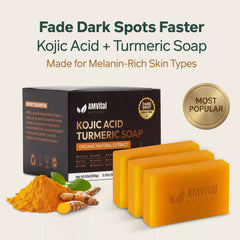
AMVital formulates turmeric-based skincare with melanin-rich skin in mind. Our Turmeric Kojic Acid Soap combines kojic acid with turmeric's soothing benefits plus shea butter and collagen to reduce irritation risk.
Every product is vegan, cruelty-free, and third-party tested. Browse our top-selling collection including turmeric face oil for your complete routine.
Here's to your golden glow!
Brighten Safely with Balanced Formulas
Kojic acid paired with turmeric, shea butter and collagen — for an even-looking tone, introduced at your skin's pace.
Shop Top-Selling Collection
About The Author
Amar Behura writes skincare education for AMVital, with a focus on turmeric-based routines and practical, sensitive-skin-friendly guidance.